

Many people still believe that cannabis fries your brain. Well, two massive studies published this year just blew that theory apart, at least for older adults.
And the story gets more intriguing, nuanced and surprising the deeper you dig.
The Big Picture
Sharon Sznitman and her colleagues at the University of Haifa published findings in Age and Ageing in November that honestly made many people do a double-take. They analysed data from nearly 68,000 UK adults over 60, and what they found challenges common assumptions about cannabis and cognitive decline.
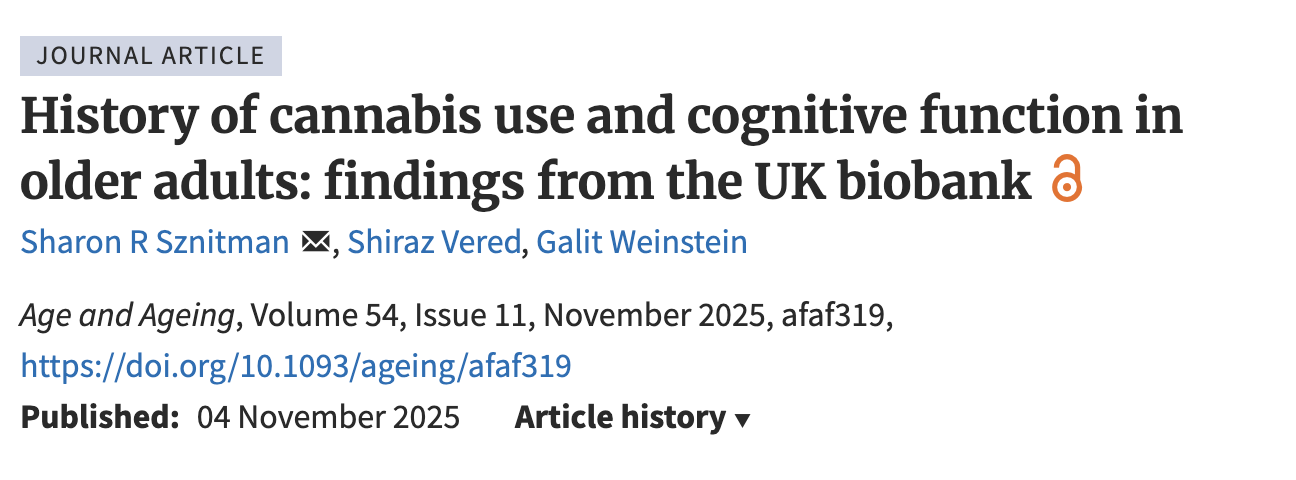
People who’d used cannabis in their lifetime actually performed better on cognitive tests than those who’d never touched it. They had beetter attention, better executive function, faster processing speed, and better memory. Across the board.
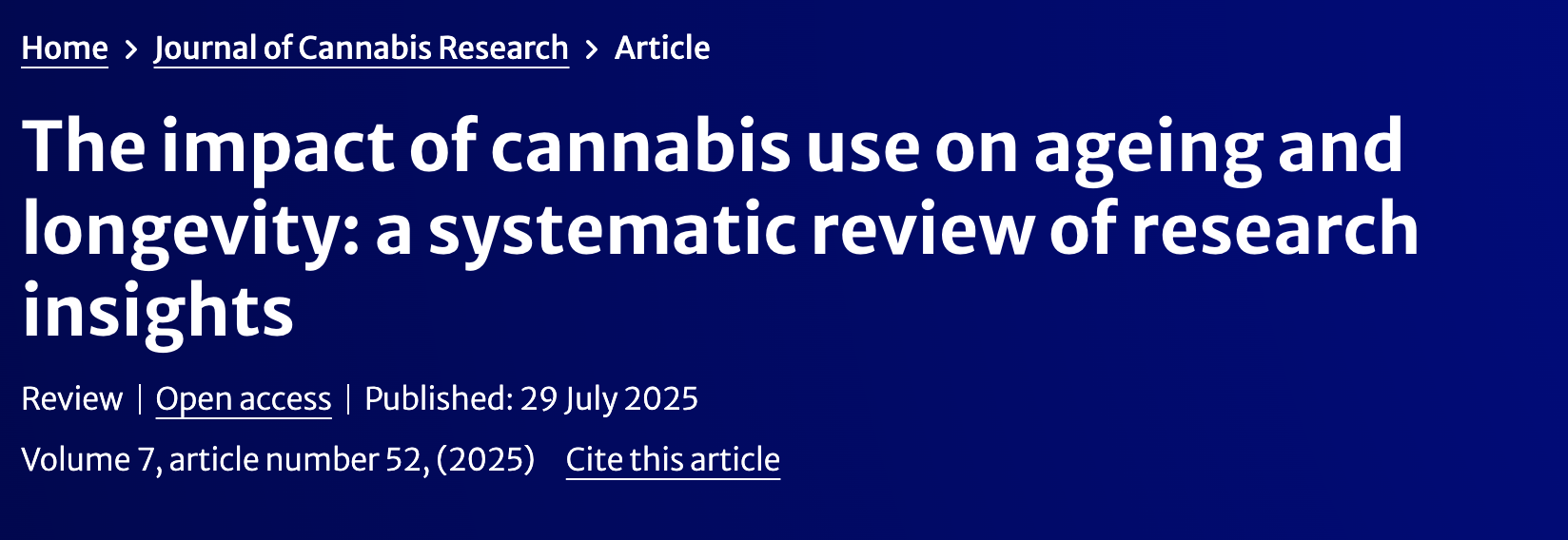
But here’s where it gets really interesting. This finding fits into a much larger pattern that researchers have been uncovering over recent years. A systematic review published earlier this year in Experimental Gerontology pulled together preclinical and human studies on cannabinoids and ageing, and the results paint a fascinatingly complex picture.
The Former Users Paradox
The UK Biobank study revealed that the cognitive benefits were almost entirely driven by former users, so people who’d used cannabis in the past but stopped. Current users only showed improvement in working memory, and actually performed worse than former users on several measures.
Even more fascinating, the researchers followed some participants for nearly six years, and former cannabis users showed slower decline in executive function over time. That’s the cognitive machinery that helps you plan, organise, and navigate complex tasks. So it’s pretty crucial, especially as we age.
What the Lab Says
The systematic review gives us context for why this might be happening. In preclinical studies (using everything from microscopic worms to mice) low doses of cannabinoids, particularly THC, showed remarkable effects in older animals:
- Extended lifespan in C. elegans (a tiny worm used in aging research)
- Improved memory and learning in older mice
- Increased synaptic connectivity in the hippocampus (the memory center)
- Reduced age-related inflammation
But these same cannabinoids often impaired cognitive function in younger animals. So the age at which you use cannabis appears to fundamentally change what it does to your brain.
The Dose Makes the Poison (Or the Medicine)
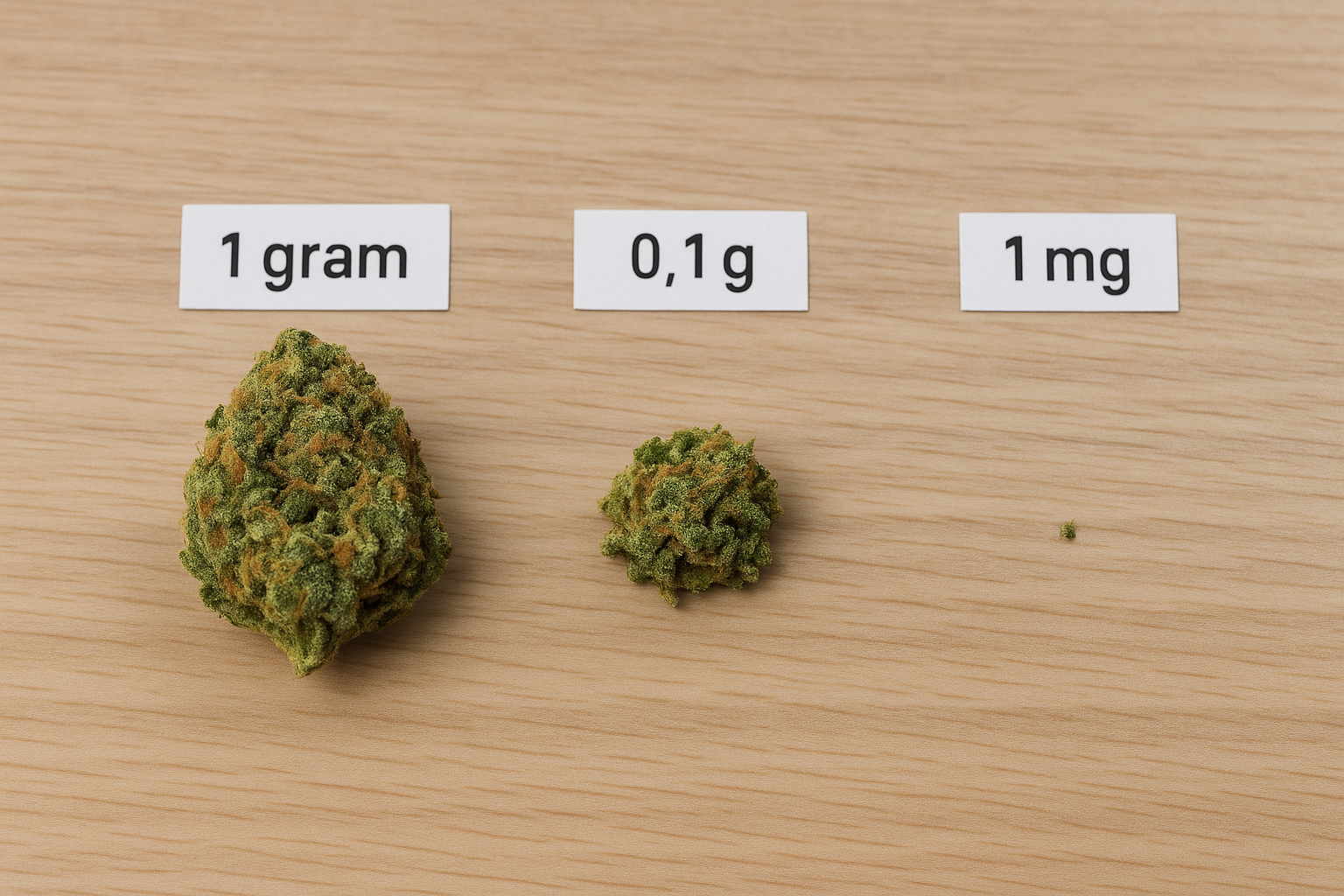
Both studies emphasise something critical. That dosage matters enormously. The UK study found that people who used cannabis for longer periods (more than 5 years) showed faster decline in processing speed. And those who started young (before 17) had worse working memory compared to late starters.
The systematic review revealed why. THC shows what researchers call “biphasic effects.” Low doses in older animals improved survival and reduced inflammation. Whilst higher doses produced negative outcomes across the board.
So it’s not just about whether you use cannabis. It’s about how much, when, and for how long.
The Confounding Reality
Now, I have to play devil’s advocate with myself here. Both papers are admirably cautious about their findings, and they should be.
The UK Biobank study points out that cannabis users in their sample tended to be better educated and wealthier. They’re baby boomers who came of age in the 60s and 70s, when cannabis use was becoming normalised among certain social groups. Maybe the type of person who used cannabis in that generation was already more socially engaged, more cognitively active, working jobs that kept their minds sharp.
There’s also what researchers call “survival bias.” The people with the most harmful usage patterns might not have made it into these studies at all. They could have died younger or developed health problems that excluded them.
The Age Factor Changes Everything

What genuinely intrigues me is how age seems to flip the script entirely. The systematic review discusses animal studies where low THC doses impaired function in young animals but improved cognition and even reversed age-related decline in older mice.
One study found that chronic low-dose THC in aged mice actually increased the number of synapses in the hippocampus and improved spatial memory. Another showed that extremely low doses (we’re talking 0.002 mg/kg) improved learning in older female mice.
The researchers suggest this might relate to age-related changes in the endocannabinoid system itself. As we age, CB1 receptor binding decreases in key brain regions. Low-dose cannabinoids might help restore that signalling, essentially fixing a deficit rather than overwhelming a healthy system.
Real-World Medicine
The systematic review also looked at real-world evidence from older adults using medical cannabis. In Canada, where it’s legal, older patients reported using it primarily for chronic pain, with improvements in pain, sleep, and mood. About a third reduced their opioid dosage.
Data from the UK’s T21 study (one of the largest observational studies of medical cannabis globally) shows older adults prescribed cannabis-based medicinal products reported significant health and well-being improvements.
But again, we’re talking about therapeutic use under medical guidance, not recreational use or self-medication.
The Mechanisms Matter
Both papers emphasise that we don’t fully understand why cannabinoids might have different effects in ageing brains. But the systematic review points to several possibilities:
- Neuroprotection: Some cannabinoids show antioxidant and anti-inflammatory properties that might become more valuable as the brain ages
- Autophagy: CBD appears to promote cellular cleanup processes that help maintain neuronal health
- System restoration: Rather than adding something new, cannabinoids might restore balance to an endocannabinoid system that’s changed with age
There’s also the “entourage effect”, the idea that various cannabinoids and terpenes work together synergistically, potentially more effectively than any single compound alone.
What About THC vs. CBD?
Here’s where things get even more nuanced. The preclinical evidence suggests THC at low doses might actually be the star of the show for cognitive effects in aging, not CBD. That runs counter to popular wisdom that CBD is the “good” cannabinoid and THC is the “bad” one.
But the relationship between them is complex. One study found that while low-dose THC alone improved spatial learning in aged mice, combining it with CBD in a 1:1 ratio eliminated the benefit. CBD might alter how THC is metabolised, suggesting that the specific ratios and formulations matter enormously.
The Duration Dilemma
Both studies found that duration of use created a complicated picture. The UK study showed that among former users, regular use and earlier onset were associated with improved attention and visual memory. But long-term use was associated with slower processing speed and accelerated decline in that domain over time.
This suggests something really important: different cognitive domains might respond differently to cannabis exposure, and some impairments might be more resistant to recovery after stopping use.
What This Means for You (Maybe)
I think the real takeaway here is radical nuance. We’ve been operating on a pretty simplistic narrative: drugs bad, abstinence good. But human biology is messy and complicated, and ageing changes the equation entirely.
For older adults considering medical cannabis for pain or other conditions, this research might be reassuring. The data doesn’t support the idea that moderate use will lead to cognitive decline. The UK study suggests past use might even be associated with slower decline in some domains.
But it also doesn’t give a green light to heavy, prolonged use. The pattern that emerges is:
- Occasional or past use in older adults: not obviously harmful, possibly beneficial
- Long-term, heavy use: potentially problematic for specific cognitive domains
- Age at initiation: matters enormously
- Dose: critical factor that determines benefit vs. harm
The Research Gap
What frustrates me is how cannabis prohibition has hampered research for decades. Both papers call for more detailed studies looking at dosage, cannabinoid composition, delivery methods, and the crucial distinction between lifetime use and use initiated in older age.
The systematic review particularly emphasises we need to understand:
- How different cannabinoids (not just THC and CBD, but also CBG, CBN, and others) affect aging
- How terpenes contribute to the effects
- Why preclinical findings often don’t translate to humans
- What the optimal dosing and timing might be
We’re only now getting large-scale studies like these because legalisation in some places has made them possible. Imagine how much better our understanding could be if we’d been studying this properly all along.

The Bottom Line
Look, I’m not about to start recommending cannabis to everyone over 40 based on these studies. But I am going to tell them to stop assuming it’s universally bad for your brain.
What these papers really show is that we need to move beyond moral panic and toward evidence-based understanding. Cannabis isn’t a magic anti-aging elixir, but it’s also not the cognitive poison we’ve been led to believe.
The truth is somewhere in the messy middle. Age matters, dose matters, duration matters, and individual biology probably matters most of all. Former use in older adults might be genuinely different from ongoing heavy use. Low doses might help restore balance to an ageing endocannabinoid system, while high doses overwhelm it.
And honestly, that’s a more interesting (and more useful) story than the simplistic narratives we’ve been working with.
The UK Biobank study “History of cannabis use and cognitive function in older adults” was published in Age and Ageing, November 2025.
The systematic review “The impact of cannabis use on ageing and longevity: a systematic review of research insights” was published in Experimental Gerontology, 2024.
Sign up to our free newsletter below, and we’ll send you a weekly update on all things weed in the UK – as well as our guide to accessing medical cannabis in the UK.


