

Here’s something you don’t see every day. An alcohol addiction program offered people a choice between a drink or a joint, multiple times a day, and tracked what happens. And the results are fascinating.
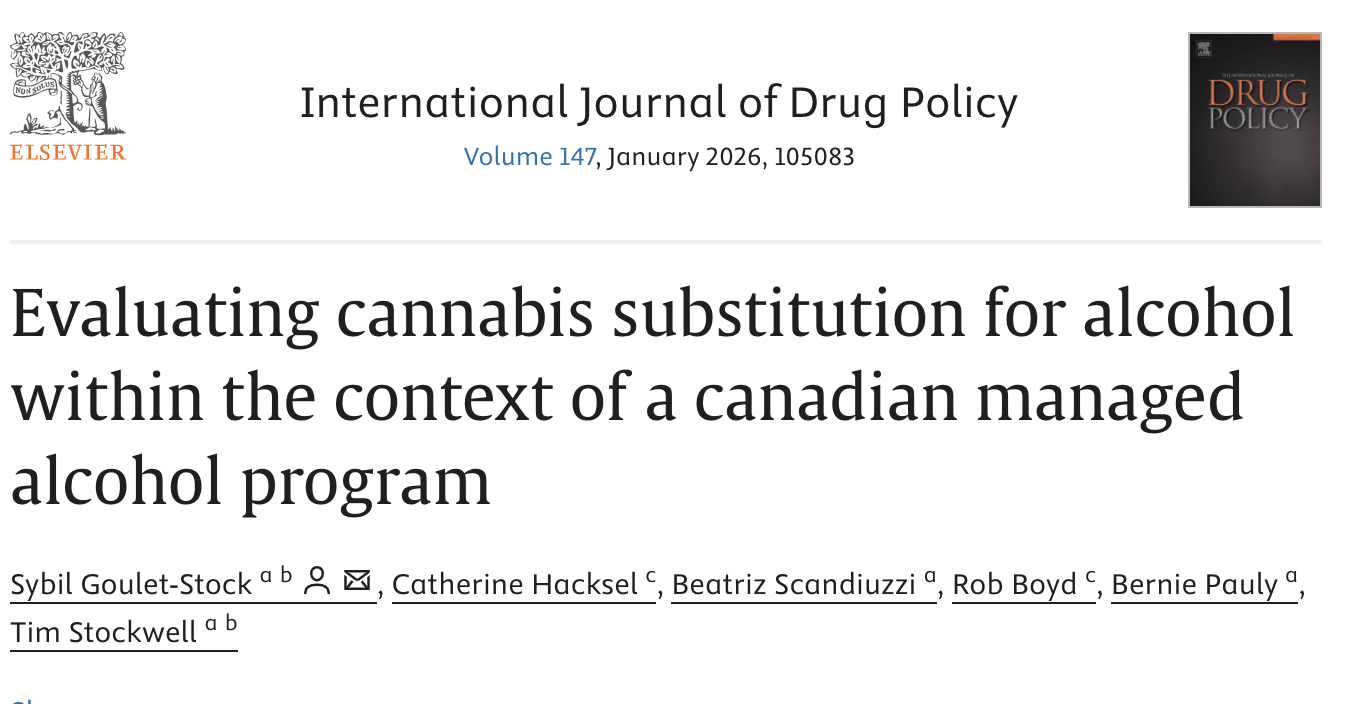
A team of Canadian researchers led by Sybil Goulet-Stock just published findings in the International Journal of Drug Policy about what happened when they introduced cannabis as an option at a Managed Alcohol Program (MAP) in Canada.
If you’re not familiar with MAPs, they’re essentially housing programs that provide measured doses of alcohol to people with severe alcohol use disorder who are experiencing homelessness. I know it sounds counterintuitive, but these programs have shown solid results in stabilising drinking, reducing emergency room visits, and improving quality of life.
The Setup
Starting in January 2023, 35 residents at this MAP were given a choice at dosing times: take their usual prescribed alcohol dose, or opt for a 0.4-gram pre-rolled cannabis joint (about 16-22% THC) instead. They tracked this for over a year, combining surveys, program records, and interviews.
These are people dealing with severe alcohol use disorder and housing instability, so not your typical research subjects. This is real-world harm reduction in action.
What They Found
The numbers are striking. Before cannabis was introduced, participants averaged 8.08 standard drinks per day from the program. After cannabis became an option, that dropped to 6.45 drinks daily.
Additionally, for every additional joint someone consumed, they drank about 2.43 fewer standard drinks on average. That’s a meaningful substitution effect. People were actively choosing cannabis instead of alcohol, and their overall drinking decreased as a result.
The researchers noted something important though. The substitution effect worked at a broader level (people who generally used more cannabis drank less overall), but day-to-day fluctuations in cannabis use didn’t predict same-day changes in alcohol consumption. In other words, it represented a longer-term shift in patterns.
Why This Matters
From a harm reduction perspective, this is huge. Alcohol causes significantly more health problems than cannabis. We’re talking liver disease, cardiovascular issues, cognitive impairment, and dramatically higher overdose risk. If people with severe AUD can reduce their alcohol intake by incorporating cannabis, that’s potentially preventing real damage.
What I find compelling here is the autonomy piece. The program gave people choice. And people used that choice in ways that appear to benefit their health. This is what harm reduction is all about.

Part of a Bigger Picture
This study doesn’t exist in isolation. Two other studies published this year found similar patterns: one showed a 25% reduction in alcohol intake after cannabis inhalation in a lab setting, another found up to 27% reduction in real-world conditions. Survey data shows about 60% of cannabis users report drinking less alcohol because of their cannabis use.
And when we zoom out to population-level data, the pattern holds. Places with legal cannabis markets (California, Canada) have seen declining alcohol sales post-legalisation. The market data suggests people are making this substitution choice at scale.
My Take
Cannabis is not a miracle cure for alcohol use disorder. It has its own risks and isn’t appropriate for everyone. But what this study demonstrates is that in a carefully structured harm reduction context, cannabis substitution can be a valuable tool.
What strikes me most is how this challenges our traditional abstinence-only thinking about addiction treatment. These participants weren’t trying to quit everything. They were trying to reduce harm and improve their lives. And by having access to a lower-risk alternative, many of them succeeded in reducing their alcohol consumption significantly.
The researchers suggest this kind of program gives people “greater choice in managing their alcohol use” and can enhance “autonomy, stability, and empowerment.” In the often paternalistic world of addiction treatment, that’s refreshing language.
For program developers and policymakers, this research offers a roadmap. In places where cannabis is legal, integrating it into harm reduction programs for alcohol could meaningfully reduce alcohol-related harms.
The future research questions are obvious: What happens to health outcomes long-term? Does this substitution help people eventually reduce both substances? How do different populations respond? But for now, we have solid evidence that for this group of people, cannabis substitution led to less drinking. And in harm reduction, that’s a win.
Sign up to our free newsletter below, and we’ll send you a weekly update on all things weed in the UK – as well as our guide to accessing medical cannabis in the UK.


