
Could cannabis be a breakthrough in brain health, chronic pain, and emotional balance — without getting you high?
Until recently, cannabis research focused on high doses and their psychoactive effects. Now, a growing body of science suggests that less may actually do more.
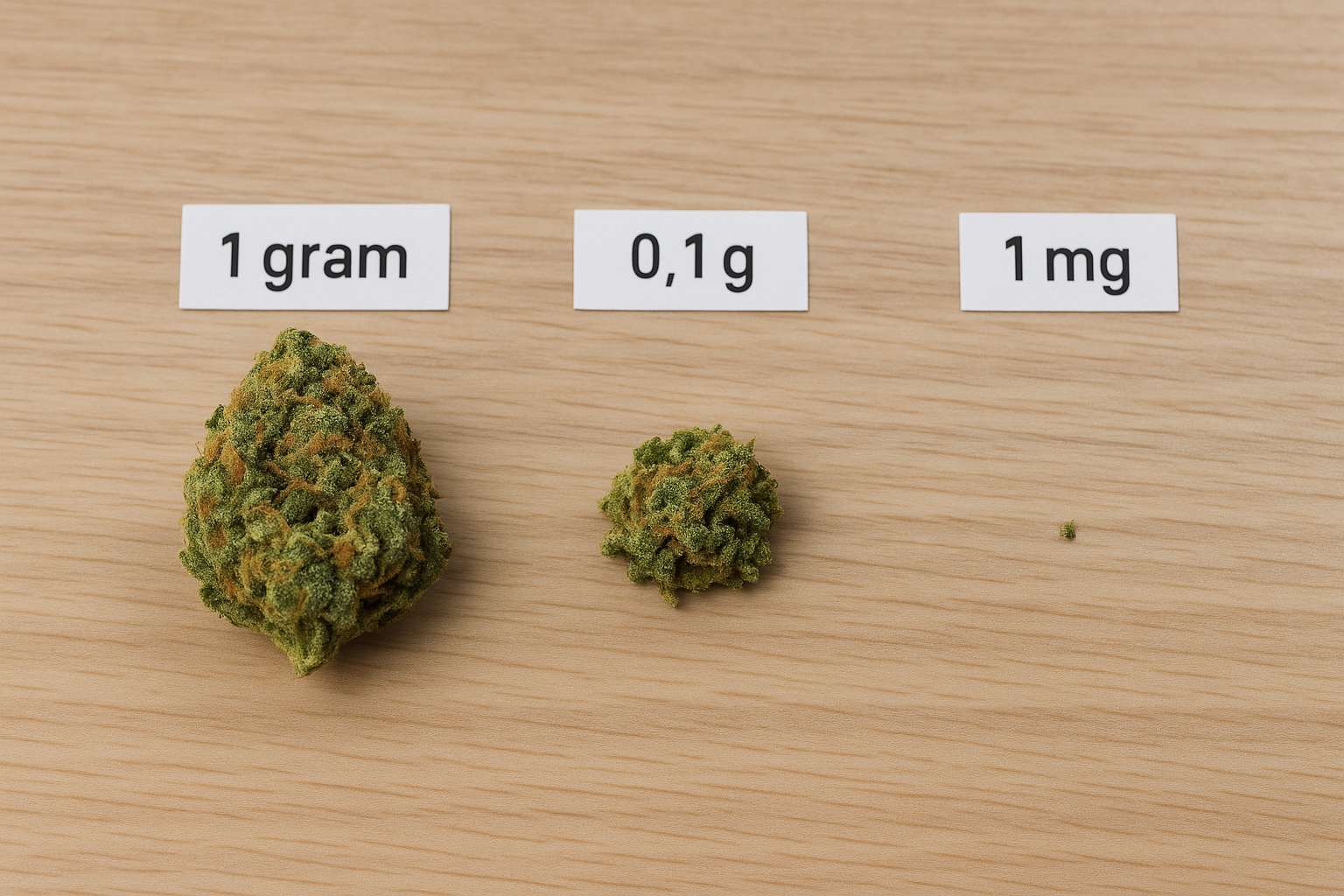
Researchers are discovering that low doses of THC (sometimes as little as 0.5 milligrams) may offer clinically significant health benefits without the high.
For reference, one gram of regular cannabis of 15% THC has 150 milligrams.
From easing pain and treating Alzheimer’s to enhancing synaptic plasticity and modulating metabolism, the science is pointing toward a profound truth: THC, when used wisely and sparingly, could become a powerful neuroprotective medicine for the modern age.
The Evidence So Far: What Science Says About Low-Dose THC
Parkinson’s Disease: Symptom Relief Without the High
A study from February this year, published in Frontiers in Human Neuroscience, found that daily low doses of a THC:CBD extract (containing just 1.0 mg THC and 0.112 mg CBD) significantly improved non-motor symptoms in patients with Parkinson’s disease.
These included improvements in sleep, mood, pain, and sexual function. Notably, these benefits came without unwanted psychotropic effects.
Pain Relief at Just 0.5mg of THC
In what may be one of the most paradigm-shifting findings to date, a study from 2020 found that just 0.5mg of THC could significantly reduce chronic pain – again, without psychoactive effects. This suggests that THC may function more like a micronutrient or neuromodulator at low doses.
Alzheimer’s Disease and THC Microdosing
A compelling case study from 2022 followed a 75-year-old man who used daily microdoses of a THC-rich cannabis extract over 22 months to successfully reduce the symptoms of Alzheimer’s disease.
Daily doses ranged from 0.3mg to 1mg, with 0.5mg being the most common. The patient experienced improvements in memory, mood, and overall function – with symptom relief described as both “rapid” and “robust.”
A separate study also found that low-dose THC may reduce aggression and agitation in Alzheimer’s patients. These are two of the most distressing symptoms for caregivers and patients alike.
Aging, Brain Metabolism, and the mTOR Connection
Perhaps the most intriguing evidence yet comes from a 2024 study published in ACS Pharmacology & Translational Science. Researchers gave low-dose THC to aged mice over time. The results were stunning:
- Cognitive function was restored
- Synapse density increased
- Brain energy metabolites rose
- mTOR activity was fine-tuned
In short: THC appeared to rejuvenate the aging brain while mimicking the metabolic benefits of caloric restriction in peripheral tissues.

Metabolism: The Mechanism Behind the Magic
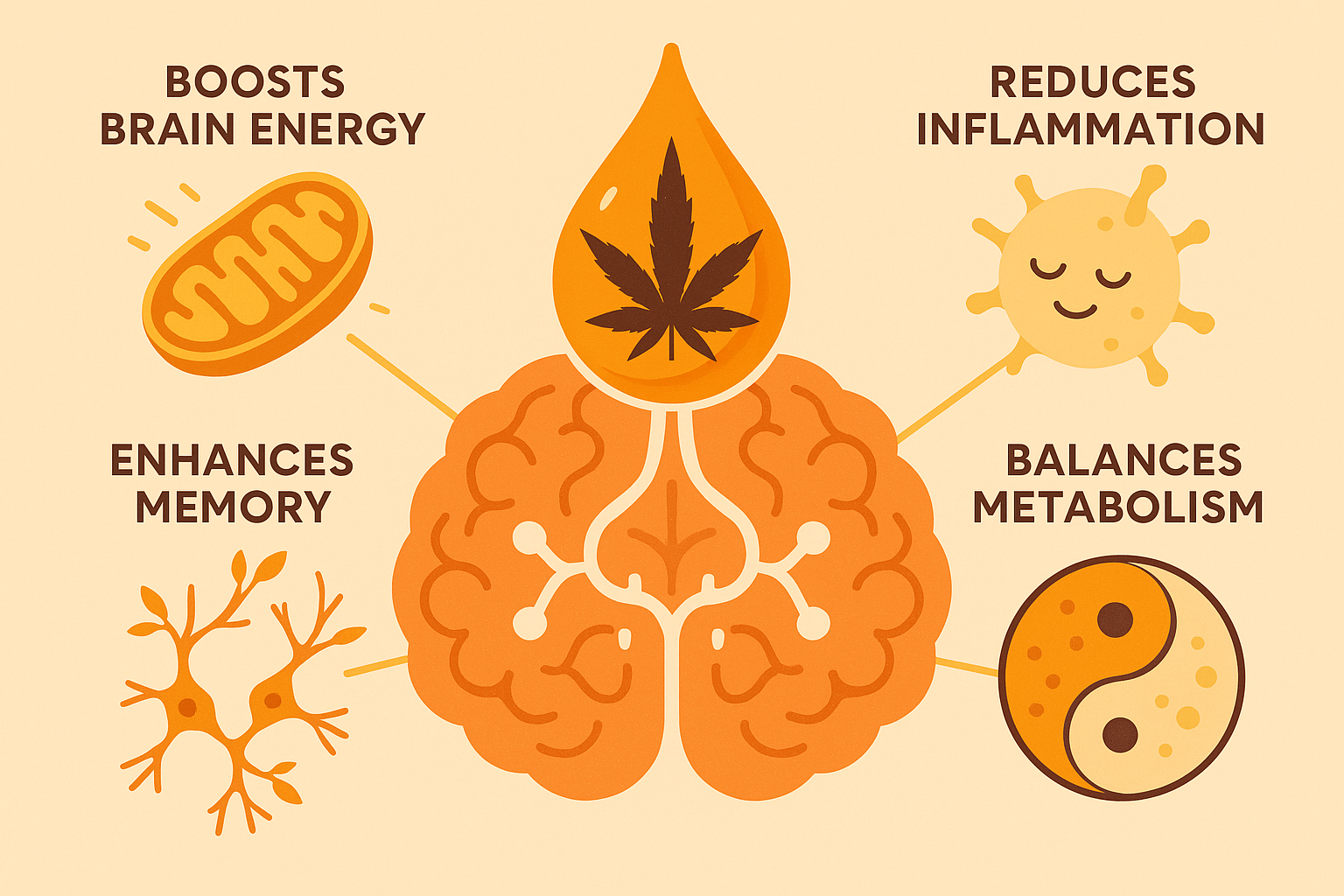
At the center of this emerging science is one idea: low-dose THC appears to gently regulate metabolism, especially in the brain.
Here’s what scientists are finding low-dose THC can do:
- Helps the brain grow and repair connections by boosting the proteins that form new synapses (the links between brain cells)
- Improves energy production in brain cells, helping them function better
- Activates a key pathway (called mTOR) briefly, which is important for memory, learning, and brain plasticity
- Reduces overactivity in the rest of the body’s metabolism, similar to the effects of fasting or calorie restriction – which are known to support healthy ageing and reduce inflammation
Together, this creates a powerful one-two effect: energising the brain while calming the body. In a way, it seems to mimic the effects of intermittent fasting, exercise and other proveen longevity strategies.
It seems low-dose THC isn’t acting like a typical drug. It’s more like a gentle tuning fork for your metabolism. Essentially, it’s helping your system find its rhythm again.
How to Use Low-Dose THC for Brain Health
This section is informational and not intended as medical advice.
Start Low, Stay Consistent
Many of the studies show that benefits arise from daily use of tiny doses, sometimes as little as 0.5mg to 1mg of THC.
Delivery Methods
- Sublingual oils or tinctures (precise dosing)
- Capsules (consistent absorption)
- Edibles (delayed but prolonged effects)
- Dry herb vape (a single inhale)
Combine With Other Practices
Low-dose THC seems to enhance the effects of lifestyle interventions like:
- Cognitive therapy (as seen in PTSD studies)
- Fasting or ketogenic diets
- Sleep hygiene
- Breathwork and meditation
- Healthy diet (reduce processed foods, high sugar, seed oils)
- Reducing toxins (alcohol, smoke, pollutants)
Track and Reflect
Keep a journal to track memory, mood, pain, sleep, and energy levels over time. Microdosing cannabis is about subtle but effective.
Conditions That May Benefit
| Condition | Low-Dose THC Benefits |
|---|---|
| Parkinson’s Disease | Sleep, mood, pain, sexual function |
| Alzheimer’s | Agitation, cognitive, memory improvements |
| Chronic Pain | Reduced sensation, no psychotropic side effects |
| PTSD | Enhanced emotional regulation |
| Brain fog | Increased synaptic plasticity, energy, focus |
Final Thoughts: Cannabis as a Cognitive Tonic?
In the ancient world, plants were seen as spiritual allies. In the modern world, we’re rediscovering their potential with scientific precision.
Low-dose THC isn’t about getting stoned to escape. It’s about restoring and preserving your health.
It won’t replace sleep, light, movement, community or meaning. But it may help your brain tap into its natural rhythms of repair, resilience, and growth.
When it comes to cannabis, less might truly be more.
Read: Guide: How To Microdose Cannabis (Benefits, Methods, Results)
Read: 12 Observations From Microdosing Cannabis Every Day For One Month
Read: How Microdosing Cannabis Helped Me Smoke A Lot Less Of It


